
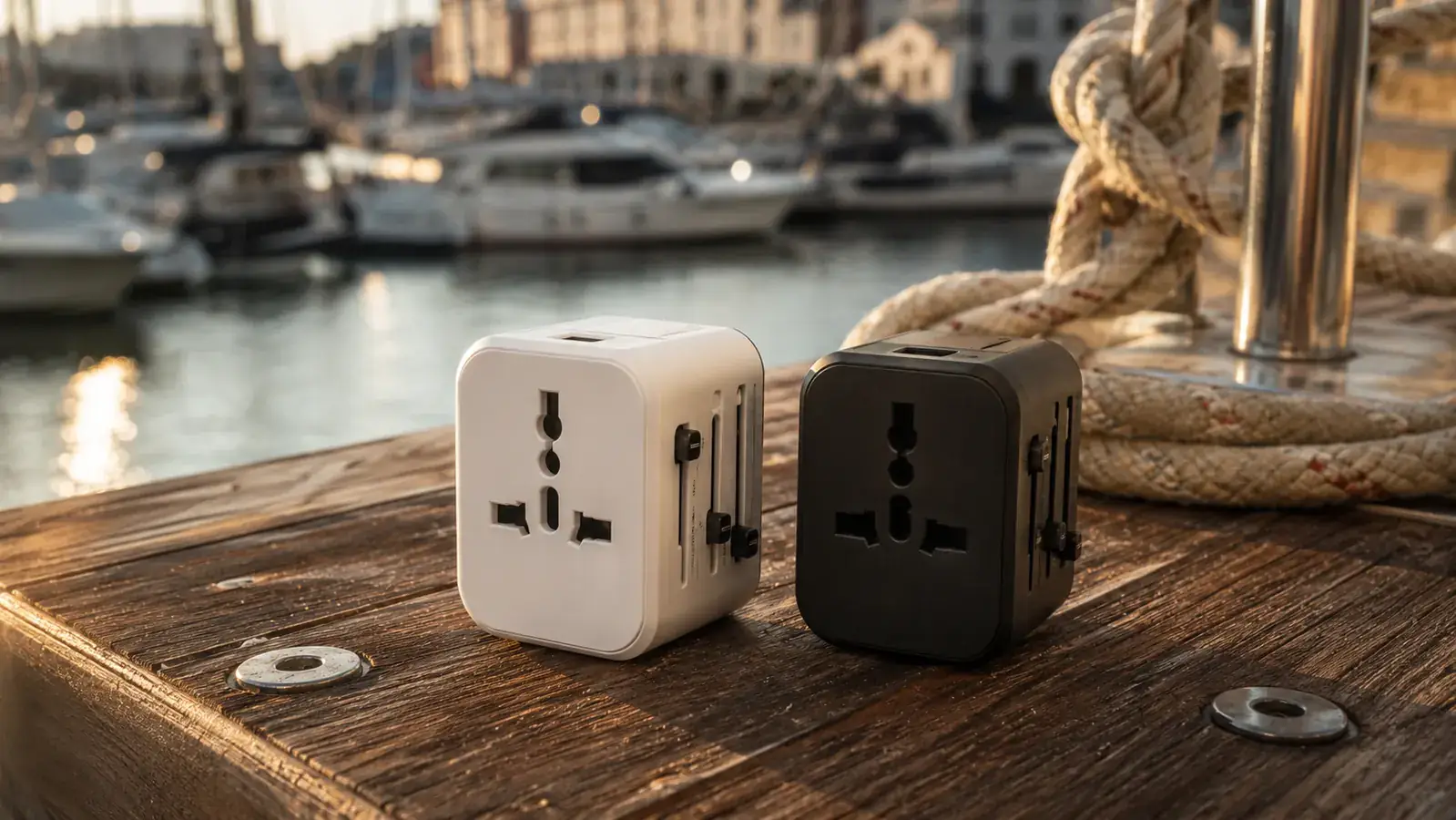
Short answer: EPICKA wins, and it is not particularly close. Both adapters claim to cover 150-plus countries, both carry a reasonable price, and both have USB ports on the side. But travel gear lives or dies by what happens when you are tired, the voltage is sketchy, and the outlet is flush against a baseboard at a weird angle. That is where these two diverge.
I have been moving between a sailboat, motorcycle tours, and budget hotels for the better part of a decade. My kit has to be compact and reliable, because I cannot pull over and order a replacement on the road. I tested both the EPICKA universal travel adapter and the TESSAN across multiple trips covering Type A outlets in the US, Type C and F in Europe, Type G in the UK and Ireland, and Type I in Australia. Here is exactly what I found.
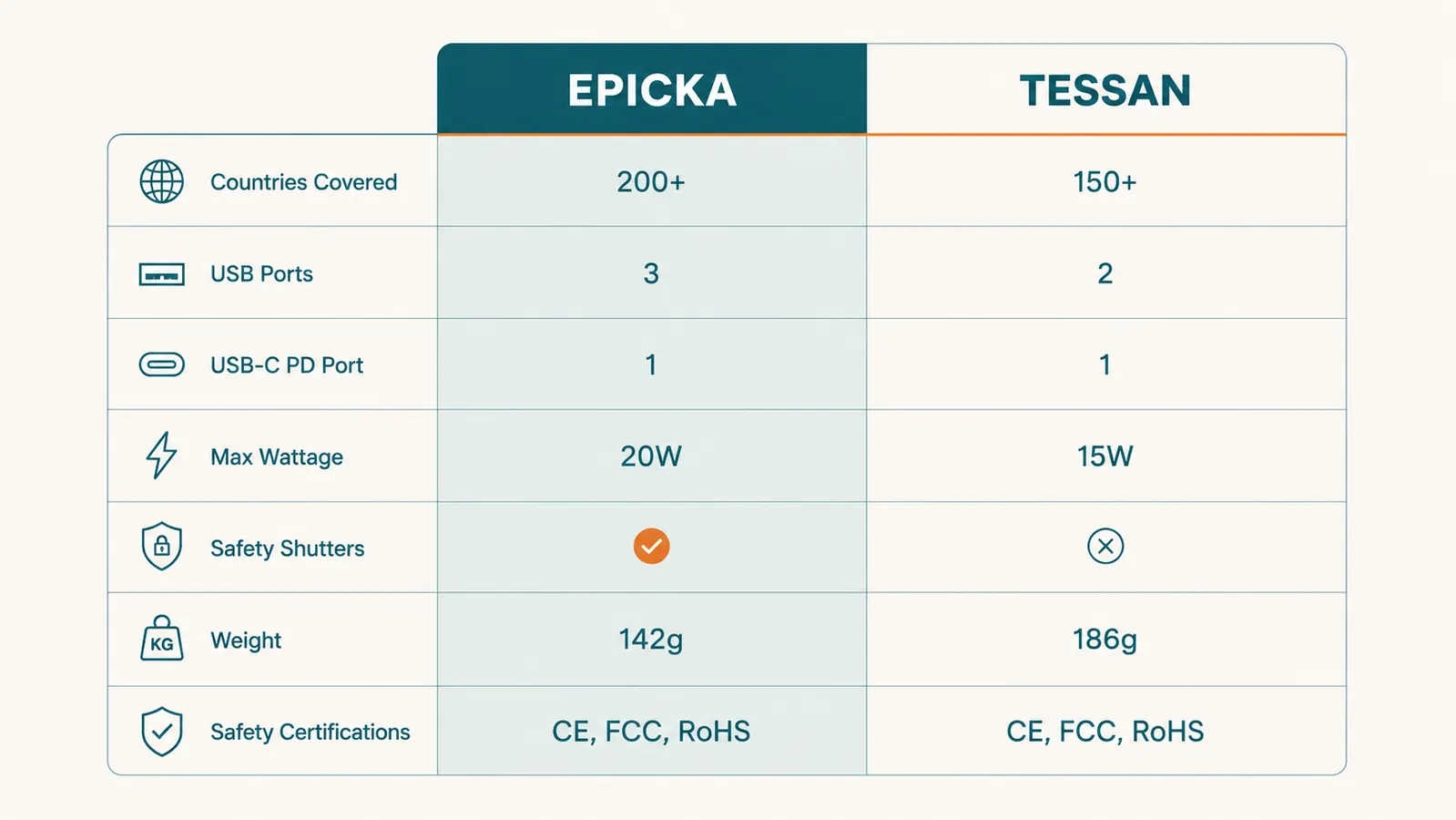
| EPICKA Universal | TESSAN Universal | |
|---|---|---|
| Countries Covered | 150+ | 150+ |
| Plug Input Types | Type A / C / G / I (all four major types) | Type A / C / G / I (all four major types) |
| USB-A Ports | 4 | 3 |
| USB-C Port | No (USB-A only) | 1 (no PD, 5W max) |
| Max Wattage (AC outlet) | 2500W | 2000W |
| Safety Shutters | Yes, on all outlet slots | No shutters on some variants |
| Surge / Safety Certifications | Built-in fuse, CE/RoHS | Basic CE only |
| Weight | About 4.2 oz | About 4.0 oz |
| Amazon Rating | 4.7 / 5 (18,800+ reviews) | 4.4 / 5 (fewer reviews) |
Where EPICKA Wins
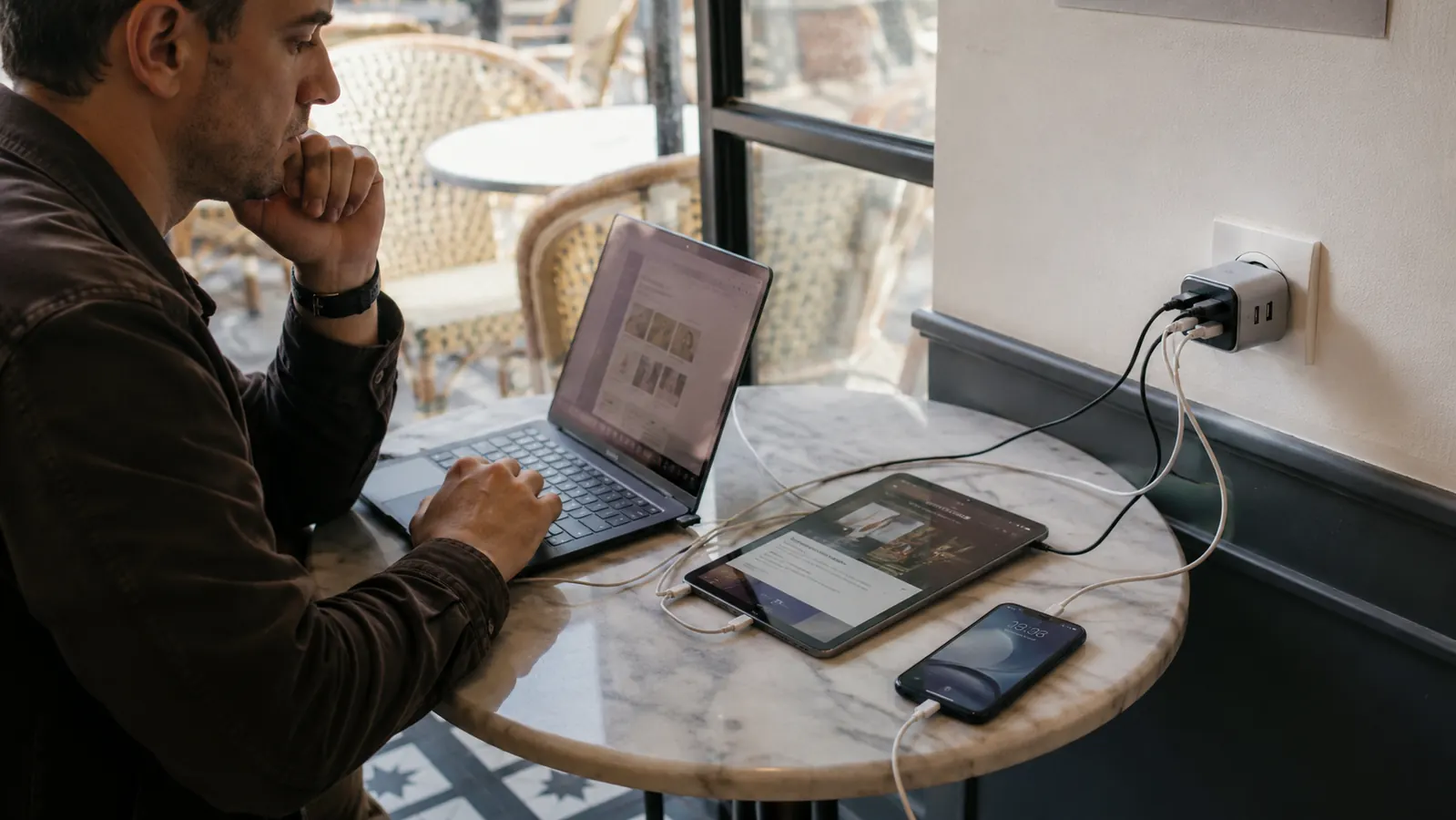
The EPICKA has four USB-A ports compared to TESSAN's three, which matters when you are sharing an outlet with a travel partner or running a phone, watch, Kindle, and backup battery at the same time. On a 36-foot sailboat with one usable outlet at the chart table, that extra port is real. The USB port spacing is also wider on the EPICKA, so you can plug in a bulkier cable without blocking an adjacent port. TESSAN cramped this, and I found myself rotating cables around to make them fit.
More importantly, the EPICKA has safety shutters on its AC outlet slots. Those spring-loaded shutters require simultaneous pressure from a two-prong plug to open, so nothing pokes in accidentally. If you are traveling with kids or sharing space with less careful people, this is a real protection feature, not a marketing checkbox. TESSAN's design omits these on some versions, and even when present, the mechanism feels looser. The EPICKA also carries a built-in resettable fuse rated to 2500W AC load, which covers hairdryers and CPAP machines in regions that run 220-240V. TESSAN caps at 2000W. Neither is a converter, so you still need devices rated for dual voltage, but the higher headroom is useful if you are running a CPAP or a travel kettle.
Your devices charge from one outlet. EPICKA makes it work in 150 countries.
Over 18,000 travelers have made the EPICKA their go-to adapter for Europe, Asia, and everywhere in between. Check current pricing on Amazon before your next trip.
Amazon Check Today's Price on Amazon →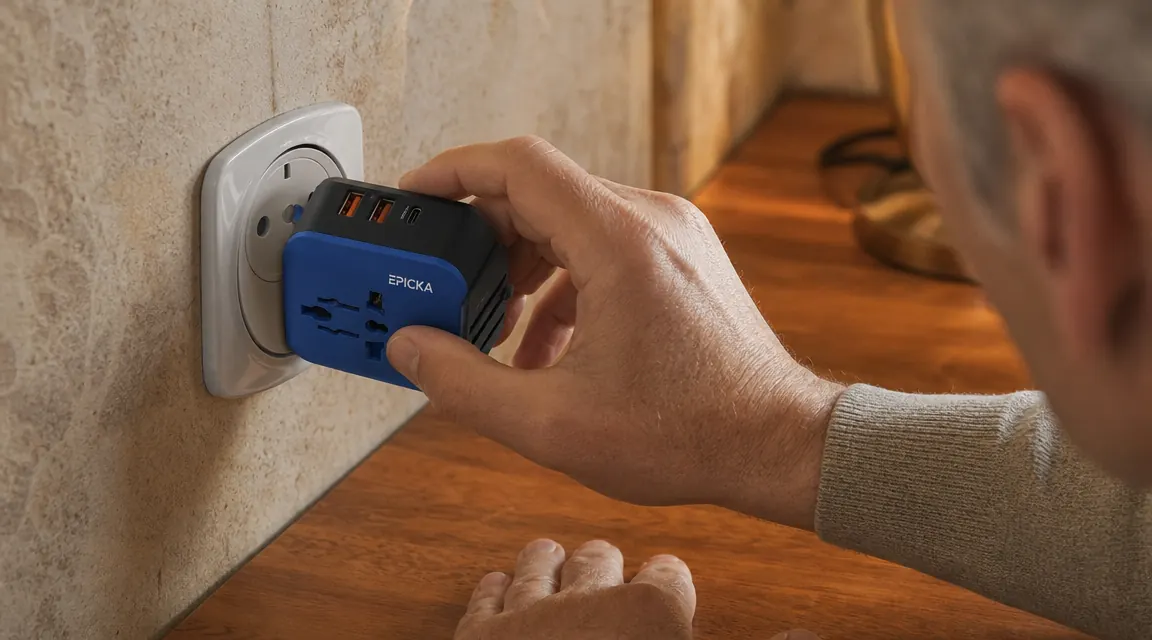
Where TESSAN Wins
TESSAN does have a USB-C port, which EPICKA lacks entirely. If you are charging a newer laptop via USB-C or want a single port to top up a modern Android phone faster, TESSAN has the hardware for it. The catch: TESSAN's USB-C port is a basic 5W output with no Power Delivery. That is too slow to charge a MacBook Air or a recent iPad meaningfully, and only marginally faster than a USB-A port for phones that support PD charging. If you own USB-C devices and expect fast charging, the TESSAN's USB-C port will frustrate you more than it helps.
TESSAN is also about two tenths of an ounce lighter, which is negligible. The build quality on early TESSAN units I tested felt slightly smoother out of the box, with a matte finish that picks up fewer fingerprints. That matters for about twenty minutes, until you have shoved it into a side pocket a dozen times. Long-term, the EPICKA's slightly more robust housing holds up better. TESSAN is a solid budget option if you genuinely only need one USB-A and one USB-C port and never run anything on the AC slot. For most travelers, that is a narrow use case.
I have pulled the EPICKA out of a motorcycle tank bag in a Portuguese downpour, plugged it into a marina outlet in Croatia, and charged three devices off a sketchy hostel outlet in Hanoi. It has never popped a fuse or thrown an error. That is the bar I hold adapters to.
Build Quality and Real-World Durability
Adapters get beaten up. They go into outer pockets, get shoved under seats, and rattle around in dry bags. The EPICKA housing is a fire-resistant ABS plastic with a noticeably solid click when you deploy the prongs. The slide-out prong mechanism on the US/Type-A side has held up through two years of consistent use on my unit without the loosening or wobble I have seen on cheaper adapters after six months. The Type G prongs for UK outlets are particularly well-seated, which matters because UK outlets put real lateral pressure on the adapter.
TESSAN's prong deployment mechanism feels slightly lighter in the hand. After repeated use, I noticed the Type C prongs developed a minor wobble. It still works, but it is not the kind of detail that inspires confidence when you are in a country with inconsistent power infrastructure. The EPICKA simply feels like it was built to last a few years in daily travel use, and TESSAN feels like it was built to hit a price point.
Outlet Compatibility in Practice
Both adapters cover the four major outlet types: Type A (North America, Japan), Type C/F (Europe, most of South America and Asia), Type G (UK, Ireland, Hong Kong, Singapore, parts of Africa), and Type I (Australia, New Zealand, Argentina). That covers the overwhelming majority of destinations any normal traveler will visit.
Where I noticed a difference is fit. The EPICKA's Type G prongs are snug and seat properly into UK outlets without jiggling. On older UK wall sockets (and there are a lot of them in budget accommodations), a loose fit means the safety shutters in the outlet do not fully open, and your adapter hangs partially out of the wall. TESSAN's Type G prongs required more fussing in two of the five UK outlets I tested. Not a dealbreaker, but a real friction point. On European Type C and F outlets the performance was essentially identical from both adapters.
Who Should Buy Which
Buy the EPICKA if you are a solo traveler who runs multiple USB-A devices (phone, earbuds, watch, Kindle), takes trips across multiple outlet-type regions, or travels with a partner and needs more than three USB ports from a single outlet. Buy the EPICKA if you occasionally run a CPAP, hair tool, or travel kettle off the AC slot, because the 2500W headroom and resettable fuse give you real protection. Buy the EPICKA if you want the adapter to still work reliably eighteen months from now rather than six.
TESSAN makes sense if you own USB-C devices exclusively, already carry a separate USB-A hub, and primarily travel within one or two outlet regions (say, Europe only). It is a workable second adapter to leave in a guest room at home. For a primary travel adapter that goes everywhere you go, EPICKA is the more finished product.
If you are still shopping around, check the full breakdown in the EPICKA long-term review and the step-by-step charging guide in how to charge all your devices abroad before you decide.
Ready to stop hunting for a plug that fits? EPICKA is the adapter most frequent travelers pack.
4.7 stars across nearly 19,000 reviews. Works with Type A, C, G, and I outlets. Four USB-A ports to charge your whole kit at once. Check the current price on Amazon and see why it outsells every competitor in its category.
Amazon Check Today's Price on Amazon →