
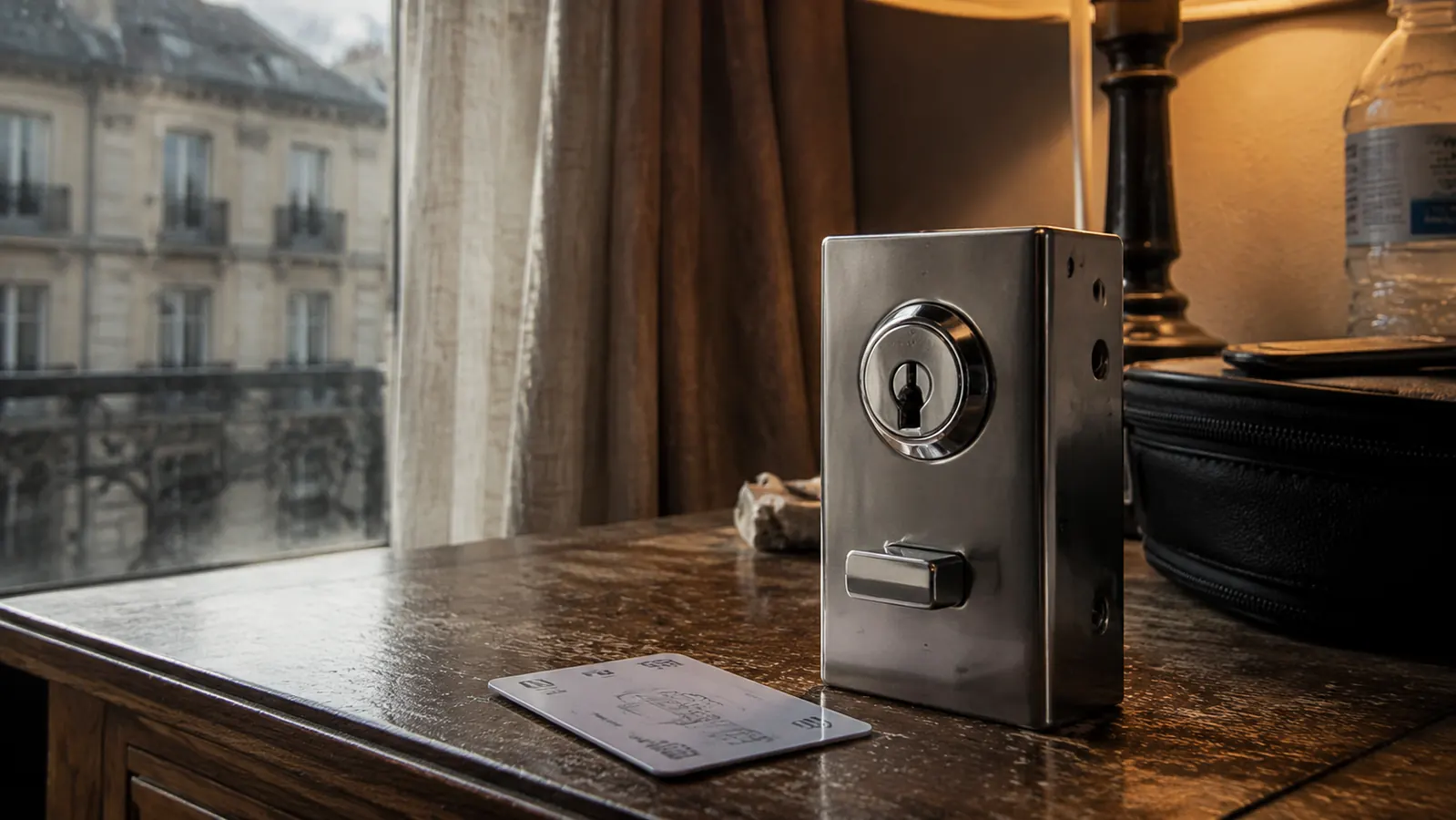
I was in a guesthouse outside Cartagena, Colombia, around midnight in March 2024. The door had a deadbolt, but when I tested it by pushing from the outside, the whole frame flexed. The deadbolt was catching on maybe a quarter inch of rotten wood. I knew then that whatever the property called a lock, it was not keeping anyone out who actually wanted in. That was the night I dug the Addalock out of my jacket's inner pocket for the first time and used it for real. I slept fine. The Addalock, for anyone who has not seen one, is a flat piece of stainless steel about the size of a large pen cap that you fold open and wedge into the gap in a door's strike plate. Once it's seated, the door cannot be pushed open from the outside regardless of whether someone has a key, a card, or a pry bar. It does one thing. It does that thing well. I have now used it in more than thirty hotels, hostels, and Airbnbs across Colombia, Portugal, Thailand, Morocco, and several US states, and I carry it every time I leave the boat or the bike.
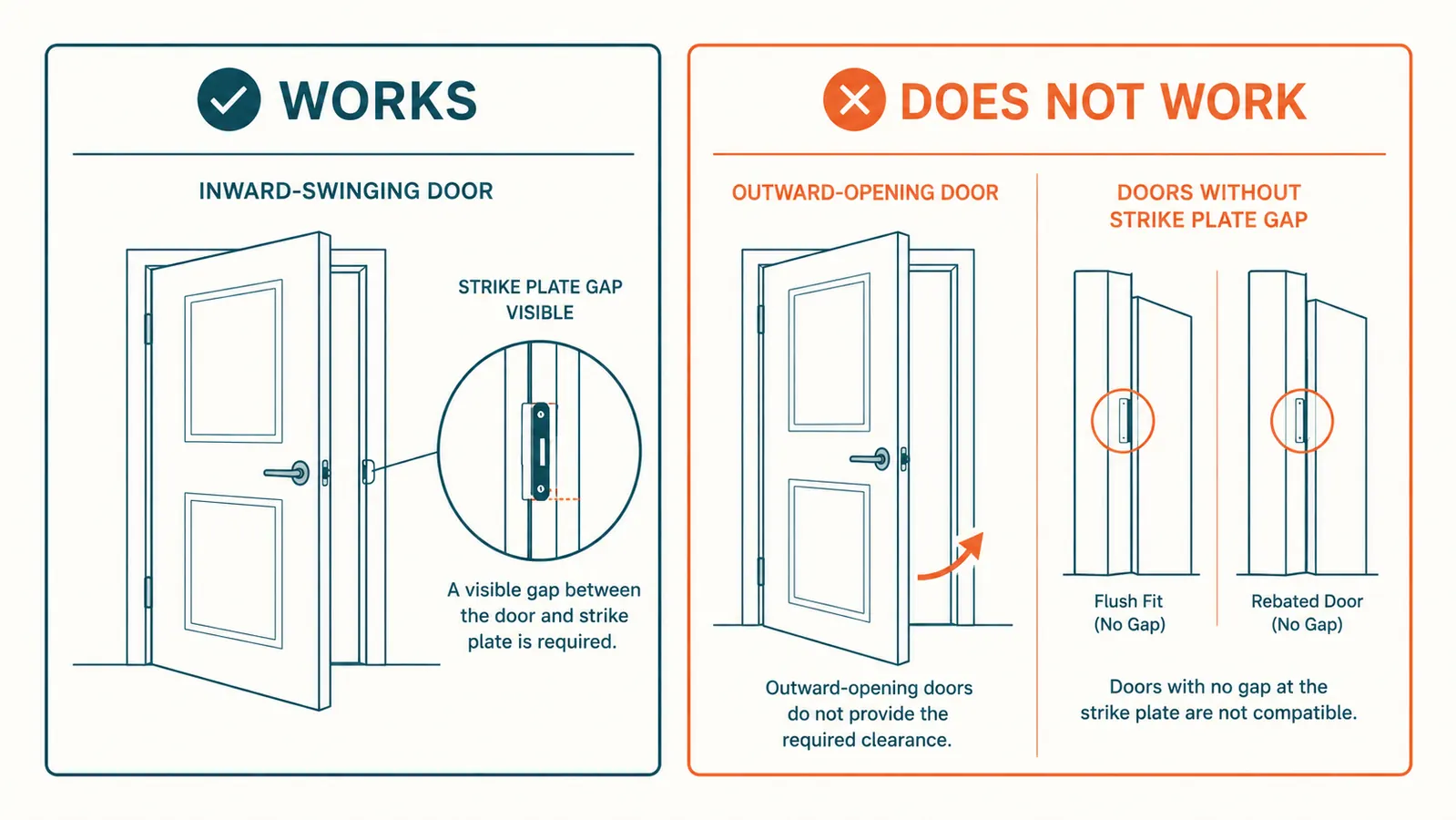
Before I go further, two things you need to know up front. First, the Addalock only works on inward-swinging doors that have a standard strike plate with a visible gap. If your door swings outward, or if the strike plate is flush with no accessible gap, this lock is not going to help you at all. Second, and this is not optional: never use this lock on a door that could be a fire exit. If there is an emergency and you need out in seconds, a portable lock that requires two hands and a calm moment to remove is a hazard. I use it only on interior bedroom doors with a separate primary exit path. Keep that in mind throughout this review.
The Quick Verdict
A legitimately useful piece of travel security gear that does exactly what it promises on compatible doors. Not a universal solution, but the right tool for the right situation.
Amazon Check Today's Price →If your hotel deadbolt has wobbled even once, this is a budget fix.
The Addalock has 18,671 reviews and a 4.4-star average because it works when hotel hardware fails. Check current pricing and availability on Amazon.
Amazon Check Today's Price on Amazon →How I Have Used It Over Two Years
My typical setup is a solo motorcycle ride or a passage on the sailboat that eventually puts me in a hotel or a rented room somewhere. I am not usually in the Four Seasons. I stay in mid-range and budget properties because good bones and a good location matter more to me than a turndown service. That means I have seen the full range of door quality: solid-core steel doors with heavy deadbolts in Lisbon, hollow plywood with a handle lock in a Bangkok guesthouse, and everything in between. The Addalock lives in the left breast pocket of my riding jacket, folded flat. It weighs almost nothing and takes up about the same space as a ballpoint pen folded in half.
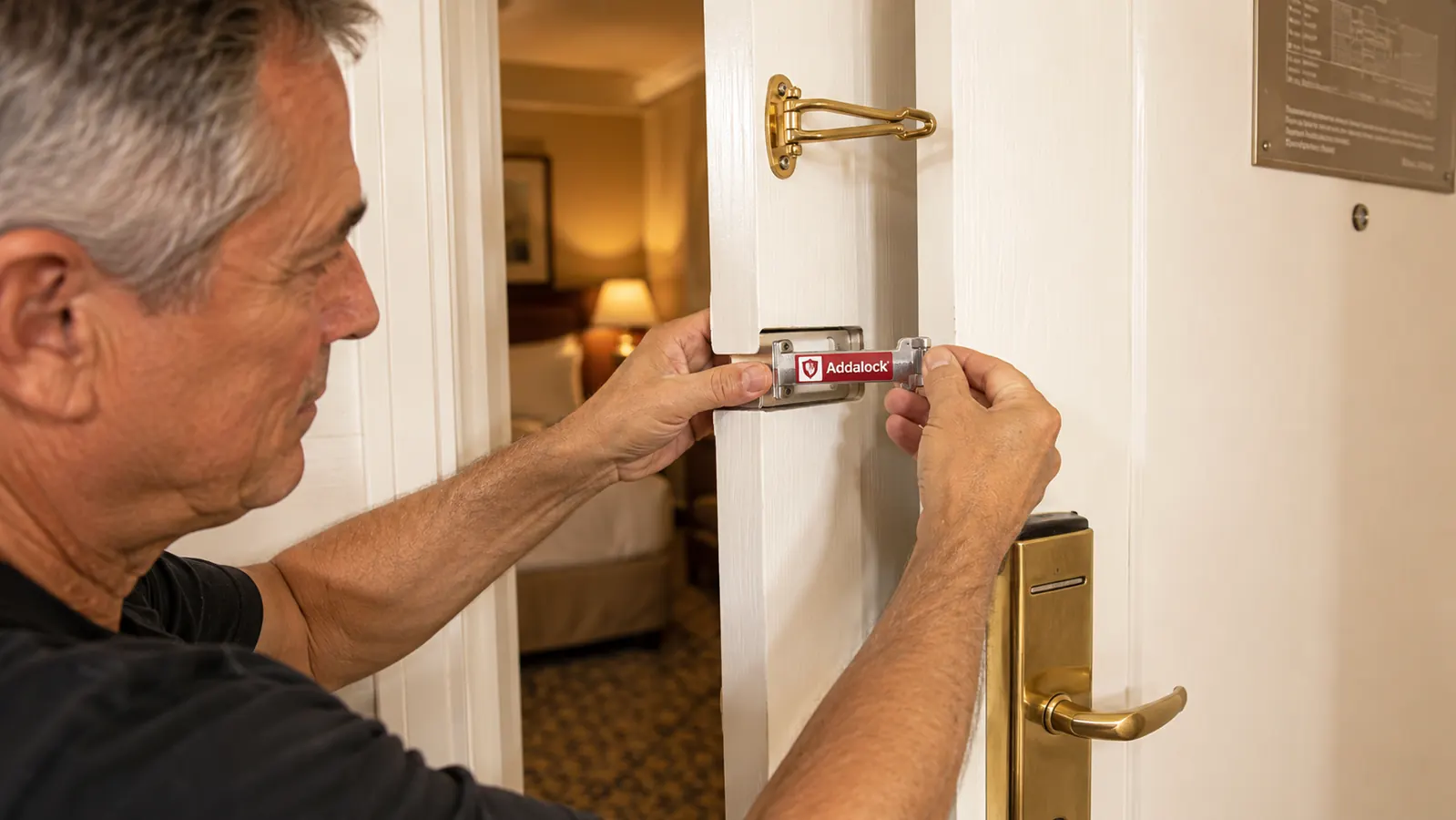
My first step when I check in anywhere is to close the door, engage the deadbolt if there is one, and then push the door from the frame side to see how much it moves. If it moves more than a centimeter, I install the Addalock as a backup. Installation takes about eight seconds once you have done it a few times. You fold the latch arm out, slide the flat plate into the strike plate gap with the door just slightly ajar, then close the door fully so the arm engages against the door's edge. From that point, the door cannot swing inward even with full force applied from outside. I have tested this by asking hotel staff to try opening my door while I held a camera pointed at the gap, not because I am paranoid but because I wanted to know exactly what I was relying on.
The one consistent failure mode I discovered early: worn strike plates where the gap is too shallow to accept the lock's flat arm. This showed up in two older US motels where decades of painting had built up around the strike plate enough to narrow the slot. The fix is a quick test before committing to the room. If the arm will not seat, I ask for a different room. About 15 percent of doors I have encountered in the past two years had a compatibility issue of some kind, most commonly a too-shallow gap or an outward-swinging door.
The Mechanics: Why This Design Actually Works
Most portable door locks try to brace against the floor or the wall. The Addalock works differently. It captures the door's own strike plate as an anchor point. The strike plate is typically the strongest part of the door frame assembly because it is screwed directly into structural framing behind the drywall. By anchoring there and using the door edge as the opposing bearing surface, the Addalock creates a lever situation that resists a pushing or shoulder-charge force with a mechanical advantage that is genuinely impressive for something this small.
The device itself is investment-cast stainless steel, not stamped thin-gauge sheet metal. I bent a competitor's product by closing a heavy door too hard against it. The Addalock has not bent, scratched, or deformed in any meaningful way across two years of daily carry and regular use. The fold hinge has a positive detent in both the open and closed positions, so it doesn't flop around loose in your pocket. The tolerances are tight. This is not an expensive product, but it is a well-made one.
The critical limitation is the strike plate requirement. If the door you are trying to secure has no strike plate gap accessible from inside the room (this happens with certain European door designs that use multi-point locking systems with flush plates, or any door that swings toward you rather than away from you), the Addalock is useless. This is not a flaw; it is a physics constraint. Know this before you pack it.
Performance Over Two Years: What Held Up, What Did Not
The lock itself has held up perfectly. No issues with the steel, the hinge, or the surface finish. I dropped it overboard once and fished it out of three feet of saltwater within a few minutes. Rinsed it, dried it, works identically. Salt air has not affected it. If you are a sailor or spend time near the coast, you will appreciate that the stainless construction is not marketing copy; it genuinely resists corrosion.
What did change over two years is my technique. Early on I would sometimes have the arm seated in the gap at a slight angle, which reduced its holding strength. Now I take an extra two seconds to make sure the flat plate is fully flush against the back of the strike plate opening before closing the door. That habit change came from testing, not from a manual. The instructions that come in the box are minimal. There is a learning curve of maybe three installs before you get it right consistently.
Hotel deadbolts are often the weakest link in the room. The Addalock turns a flexible door frame into a non-issue by capturing the one part of the assembly that is actually built to handle force.
I also want to be honest about what this lock does not do. It does not make a flimsy hollow-core door stronger. If someone is willing to kick through the door itself rather than push the handle, the Addalock will not help. It prevents the latch from being bypassed; it does not reinforce the door panel. For a truly weak door in a genuinely unsafe area, this lock is one layer of deterrence among several things you should be doing: asking for a room away from ground level, not advertising your valuables, understanding the local emergency procedures. Gear is not a substitute for situational awareness.
Addalock vs The Door Chain Already in the Room
Every few trips, someone asks me why I bother with the Addalock when hotel rooms already have a chain. I have three answers. First, chains are often poorly installed, with screws that pull out of drywall under moderate force. I have personally watched a hotel maintenance worker replace a chain by drilling new holes four inches from the stripped original ones in the same hollow drywall. Second, chains allow the door to open a few inches, which is sometimes enough for a hand or a tool to reach in. The Addalock allows zero movement. Third, and most practically, Airbnbs and many budget guesthouses outside the US have no chain at all. The Addalock fills that gap and then some. For travelers who want a deeper comparison of portable security options, the article on Addalock vs SABRE portable door lock covers the specific tradeoffs between these two popular designs.
The one scenario where I genuinely prefer a door chain over the Addalock: a room where I need to be able to open the door quickly for someone I'm expecting, like a travel companion bringing food. Removing the Addalock and resetting it takes longer than sliding a chain off and back on. It's a small thing but worth knowing if you are frequently opening and closing your room door with the security engaged.
Fire Safety: The One Rule You Cannot Skip
I want to spend a full section on this because I see it glossed over in other reviews. The Addalock, installed on a door, means that door cannot be opened from the outside. In a hotel fire, that is your primary escape route, and it may also be the route emergency responders need to reach you. Never use this lock on your only exit from a room. In practice, I use it only when the room has a window large enough to exit from at ground or low floor level, or when the room has two doors, with the Addalock on the bedroom door and the primary exit path through a separate door. If I am on a high floor with no alternate exit, I rely on the deadbolt only. A portable lock that traps you is worse than no lock at all. Hotel evacuation maps are posted on the back of the door for a reason; read them when you check in and factor that into whether and how you use this device.
Who This Is For
If you stay in budget hotels, international guesthouses, or Airbnbs more than a few times a year, the Addalock belongs in your bag. It is especially well-suited to solo travelers who are away from home and don't have a travel partner to add a second set of eyes. Female solo travelers have consistently rated it highly in the verified reviews, and based on the mechanical reality of how it works, I understand why. It costs about what a single budget meal costs and takes up less space than a pocket knife. You will also want to read 10 reasons every solo traveler should carry a portable door lock for a broader look at why this category of gear matters before your next trip.
It is also a solid option for people who rent rooms through platforms where the host retains a key. Whether you trust your host or not, a secondary lock that no one else can open from outside gives you a layer of privacy and security that feels reasonable to want. I am not suggesting hosts are untrustworthy. I am suggesting that peace of mind is worth 25 dollars and half an ounce of carry weight.
Who Should Skip It
If you travel exclusively to high-end hotels with solid-core doors, modern multi-point locking hardware, and a front desk with 24-hour security, you probably do not need this. You also do not need it if you primarily book outward-swinging door properties, though you may not know that until you arrive. And if your door has no accessible strike plate gap, this specific lock will not work for you; look at door stop alarms or wedge-style blockers as an alternative. Finally, skip it if you are not confident you will use it correctly every time. A portable lock that is installed wrong or not at all gives you false confidence without giving you actual security.
What I Liked
- Stainless steel construction resists corrosion, bending, and years of carry wear
- Genuinely prevents door from opening on compatible inward-swinging doors with a strike plate gap
- Weighs almost nothing and folds flat to pen-cap size
- Works regardless of whether someone has a key, a card, or a bump tool
- One of the oldest and most-reviewed portable locks available, 18,671 Amazon reviews
- No batteries, no setup, no app required
Where It Falls Short
- Incompatible with outward-swinging doors and flush or painted-over strike plates
- Does not reinforce a weak door panel against kick-in
- Removal and reinstallation takes longer than sliding a chain lock
- Instructions in the box are minimal; first-time installation requires a couple of practice attempts
- Must never be used to block a fire exit, which limits its use to rooms with alternate exit paths
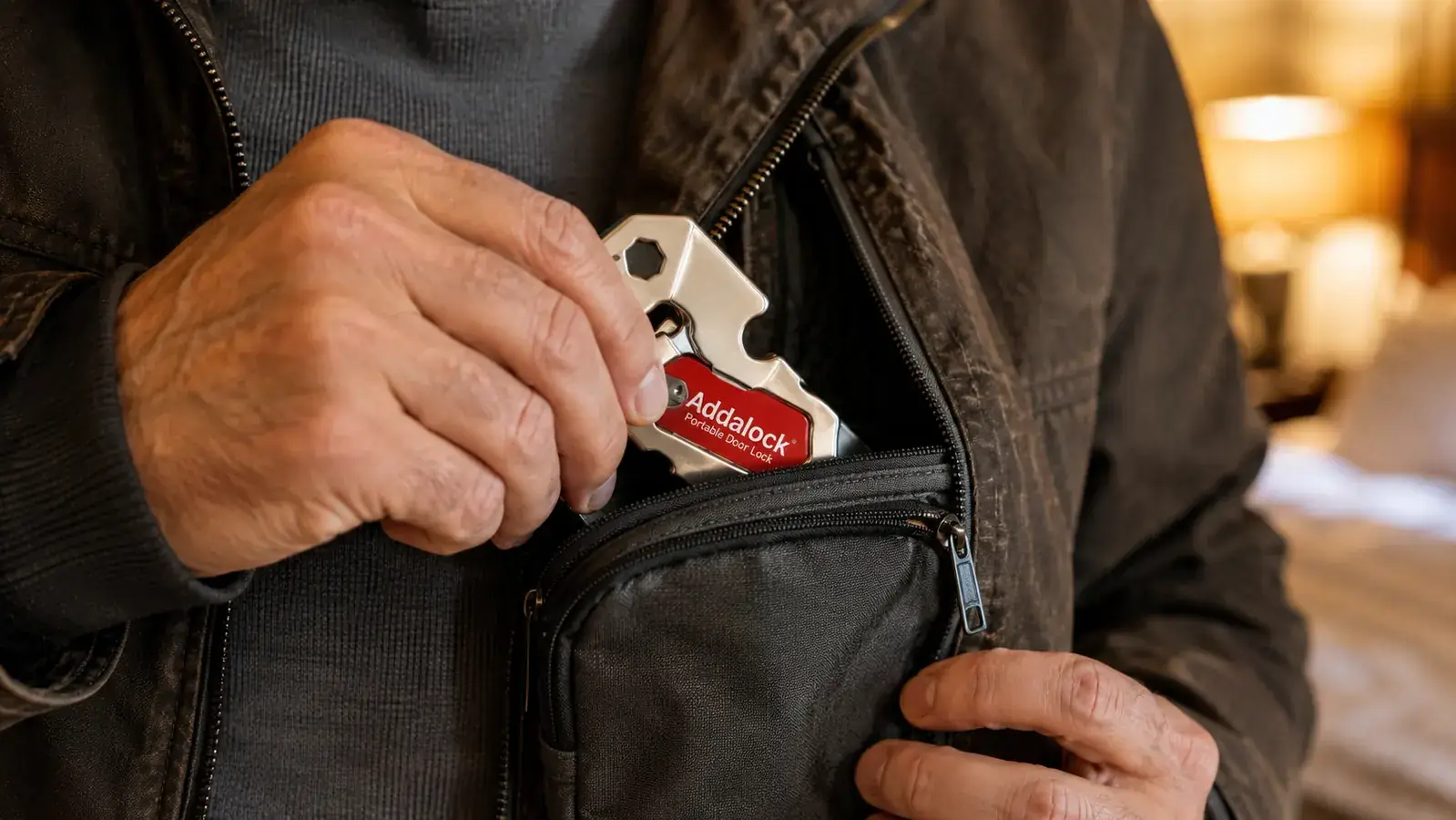
Two years on the road. Still in my jacket pocket on every trip.
The Addalock is the original portable door lock design with nearly 19,000 verified reviews. Check today's price on Amazon and see if it fits your travel kit.
Amazon Check Today's Price on Amazon →